


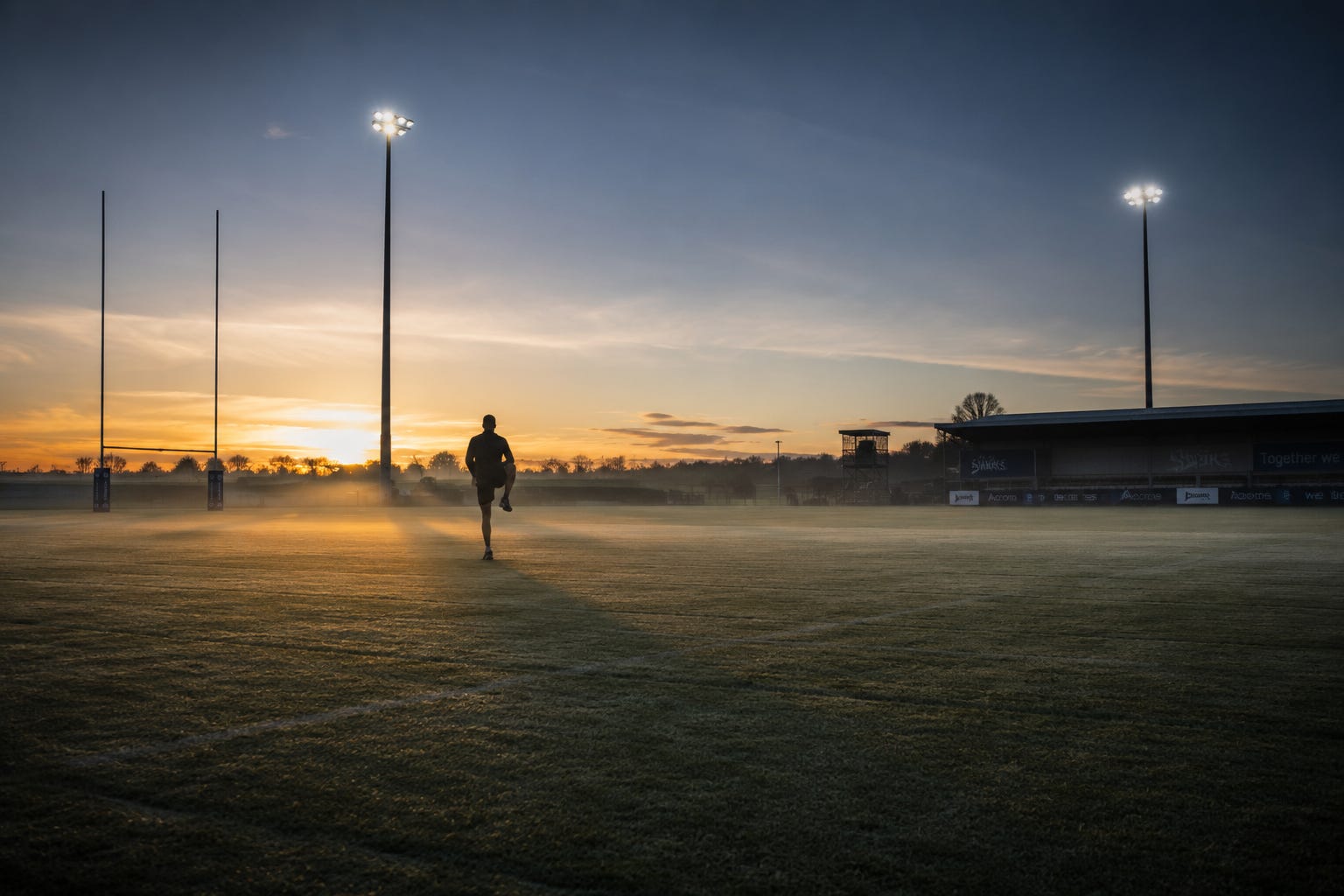
In professional rugby, the week runs to a fixed rhythm. Match on Saturday. Sunday off. Monday: team analysis, press releases, media schedule. Wednesday: press conference. Thursday and Friday: match preparation. Saturday: match.
Nobody asked whether they felt motivated on a Monday morning. The week had a shape and everyone operated inside it. The habit was not a decision you made each day. It was built into the structure of the environment.
That is the thing most people misunderstand about habits. They treat them as a matter of willpower and discipline, something you summon when you feel like it. Elite sport treats them as a matter of system. The habit runs whether motivation is present or not, because the structure makes not doing it harder than doing it.
Here is how to apply that logic outside of sport.
1. Design your environment before you rely on your willpower
Willpower is a finite resource and it depletes across the day. Elite performers do not rely on it for the things that matter most. Instead, they design environments where the right behaviour is the path of least resistance. The training kit is already packed. The session is already in the diary. The decision has already been made.
Try this: Identify one habit you want to build. Now ask: what would make not doing this harder than doing it? Change one thing in your environment this week to reflect that answer.
2. Attach the new habit to an existing one
In professional sport, new behaviours are rarely introduced in isolation. They are attached to existing routines, slotted into the rhythm of the week so that the existing routine triggers the new one. This is why elite environments produce consistency. The new thing does not require a new decision. It rides on top of an old one.
Try this: Choose one thing you already do every day without thinking about it. Attach the habit you want to build to the end of it. Same time, same place, immediately after. Repeat for three weeks.
3. Make the standard specific, not aspirational
Vague habits do not stick. “I want to exercise more” is not a habit. “I walk for twenty minutes every morning before I open my emails” is a habit. Elite sport runs on specificity because specificity is measurable, and what is measurable can be held to.
Try this: Rewrite one habit you are trying to build in precise terms. When, where, how long, how often. The more specific, the more likely it survives a difficult week.
4. Review it weekly, not just when it breaks
One of the most important habits inside elite sport is the weekly review. Not because the team is behind, but because the review is what catches drift before it becomes a problem. Most people only notice a habit has slipped when it has been gone for weeks. The weekly check catches it in days.
Try this: At the end of each week, ask one question about the habit you are building: did I hold it this week? A yes keeps momentum. A no is information, not failure. Adjust accordingly.
5. Separate a missed day from a broken habit
Elite athletes miss sessions. They get ill, they travel, life intervenes. What separates the consistent performers from the inconsistent ones is not that they never miss a session. It is that a missed session does not become two, and two does not become a fortnight. One missed day is one missed day. The habit resumes the next day.
Try this: Decide in advance what your response to a missed day looks like. Not guilt, not a restart, not a recalibration. Just the next day. Write it down before you need it.
The habits that produce consistent performance are not built on exceptional discipline. They are built into ordinary structure. Design the structure well and the habit runs itself.
Great read. And really good advice. Build habits. Stay consistent. Results will come
The deeper point is that consistency is often less about strengthening the individual and more about reducing the number of decisions they have to make. That has a useful implication beyond habits: when a behavior repeatedly fails, changing the environment may be far more effective than trying to change the person.