


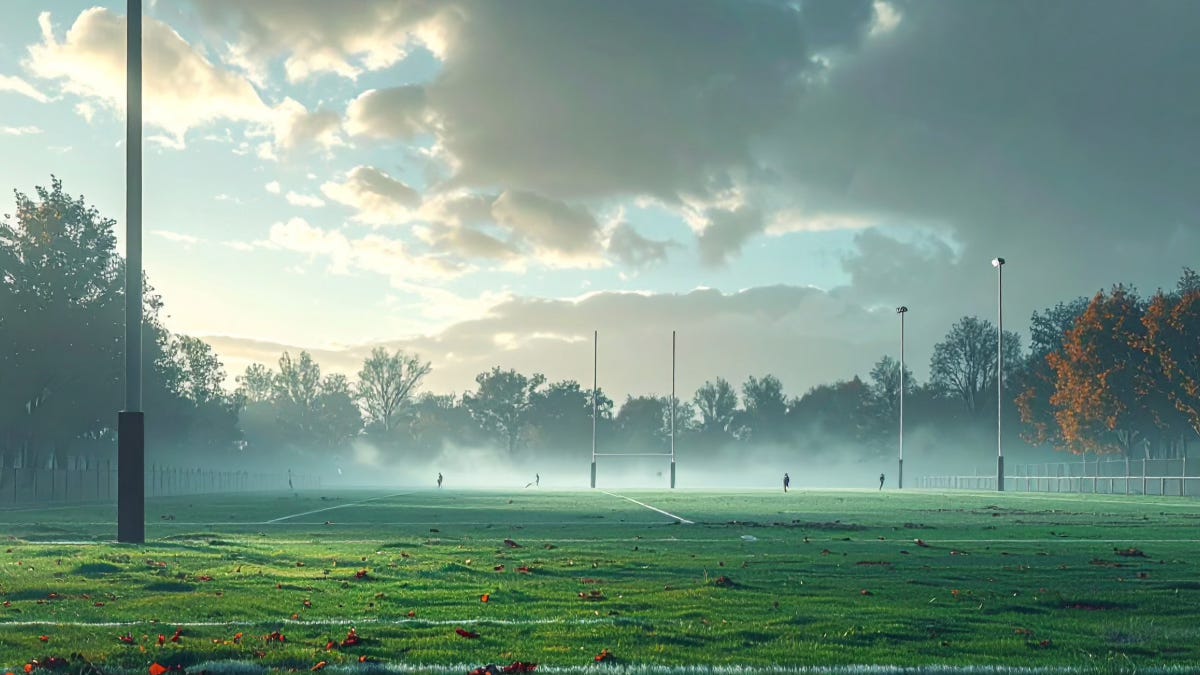
There is a version of elite sport that most people believe exists.
It is polished, high energy, full of motivation and big speeches, a constant stream of intensity and drive. It looks like talent performing at its absolute peak, where everything is sharp, focused and impressive.
That version does exist, but only in moments.
What I saw, working inside professional sport for over twenty years, was something far quieter and far more repetitive. It was less glamorous than people expect, and far more demanding in ways that are not immediately obvious.
Because elite sport is not built on those visible moments. It is built on how people operate when nothing particularly exciting is happening.
That is where performance actually lives.
Not in the big win, or the highlight, or the moment everyone sees. It is built in the days in between, in the preparation that no one is watching, in the conversations that are not comfortable, and in the standards that are held when it would be far easier to let them slip.
One of the biggest surprises for most people is how normal it all feels behind the scenes.
If you walked into a professional environment on a random Tuesday morning, you would not see constant intensity or big motivational speeches. You would see people doing their jobs. Conversations about detail. Quiet preparation. Repetition of things that, on the surface, do not look particularly remarkable.
You could walk past some of the best athletes in the country and not realise who they are.
There is no constant performance. There is no need for it.
What matters is that when the moment comes, they are ready.
And that readiness is built in those quieter periods, in the standards that are held when there is no audience, and in the consistency that most people would find monotonous.
That is the part that is rarely shown, and it is also the part that translates most clearly into real life.
There is a tendency to assume that athletes are simply different, that they are more motivated, more driven, or mentally stronger in some fundamental way. In some cases that may be true, but more often what separates them is much simpler than that.
They operate differently.
They are clearer on what matters, more disciplined in how they approach it, and more consistent in following through, even when they do not feel like it. That last part is where most people struggle, because outside of sport it is very easy to wait.
You can delay, put things off, and convince yourself that you will start when you feel more ready or more confident. In elite sport, that option does not really exist. You do not get to wait for the perfect moment, and you do not get to step back because something feels uncomfortable. You either do the work, or you fall behind.
That environment forces a level of clarity that most people never develop. It removes the space to drift, and replaces it with a need to be deliberate.
This is why the idea that elite sport is driven by motivation is so misleading.
Motivation is unreliable. It comes and goes, and if you depend on it, your performance will fluctuate with it. What actually matters is structure. Knowing what needs to be done, holding yourself to a standard, and following through consistently enough that progress becomes inevitable.
That is what I saw, again and again.
Not perfection, and certainly not constant confidence, but a way of operating that made performance far more likely over time.
And once you understand that, it becomes difficult to ignore.
Because it raises a question that is slightly uncomfortable.
If performance is not about talent, and it is not about motivation, then what is actually stopping you?
Most of the time, it is not capability.
It is the absence of a clear way of operating. No structure to fall back on, no defined standard, and no real consistency in execution. Without those things, even very capable people find themselves stuck, not because they lack potential, but because they lack a reliable way of turning that potential into action.
That is the gap I see most often now, far beyond sport.
People who could do more, achieve more, and move forward far faster, but are held back not by what they can do, but by how they approach it.
Because performance is not a moment.
It is a system.
And once you begin to see it like that, everything changes.
Well said Kate Oram.
“They are clearer on what matters, more disciplined in how they approach it, and more consistent in following through, even when they do not feel like it.” I observe they have formed outstanding habits. For tennis elite athletes, from the fitness, to diet, to sleep consistency, to drills, etc. Undertaking the grind is less of a decision to follow through or not. The grind is second nature and wrapped up into the identity of who they are.