


Inside The Dressing Room this week:
Why the allegation involving Tadhg Furlong and Gavin Coombes raises difficult questions about reputation, fairness and the court of public opinion.
What happens behind the scenes when a serious allegation becomes public, but the facts are still being established.
Why the comments made by both head coaches reveal the difficult balance between loyalty and respecting a disciplinary process.
Who looks after the players at the centre of a controversy, and why supporting someone isn’t the same as deciding they’re right.
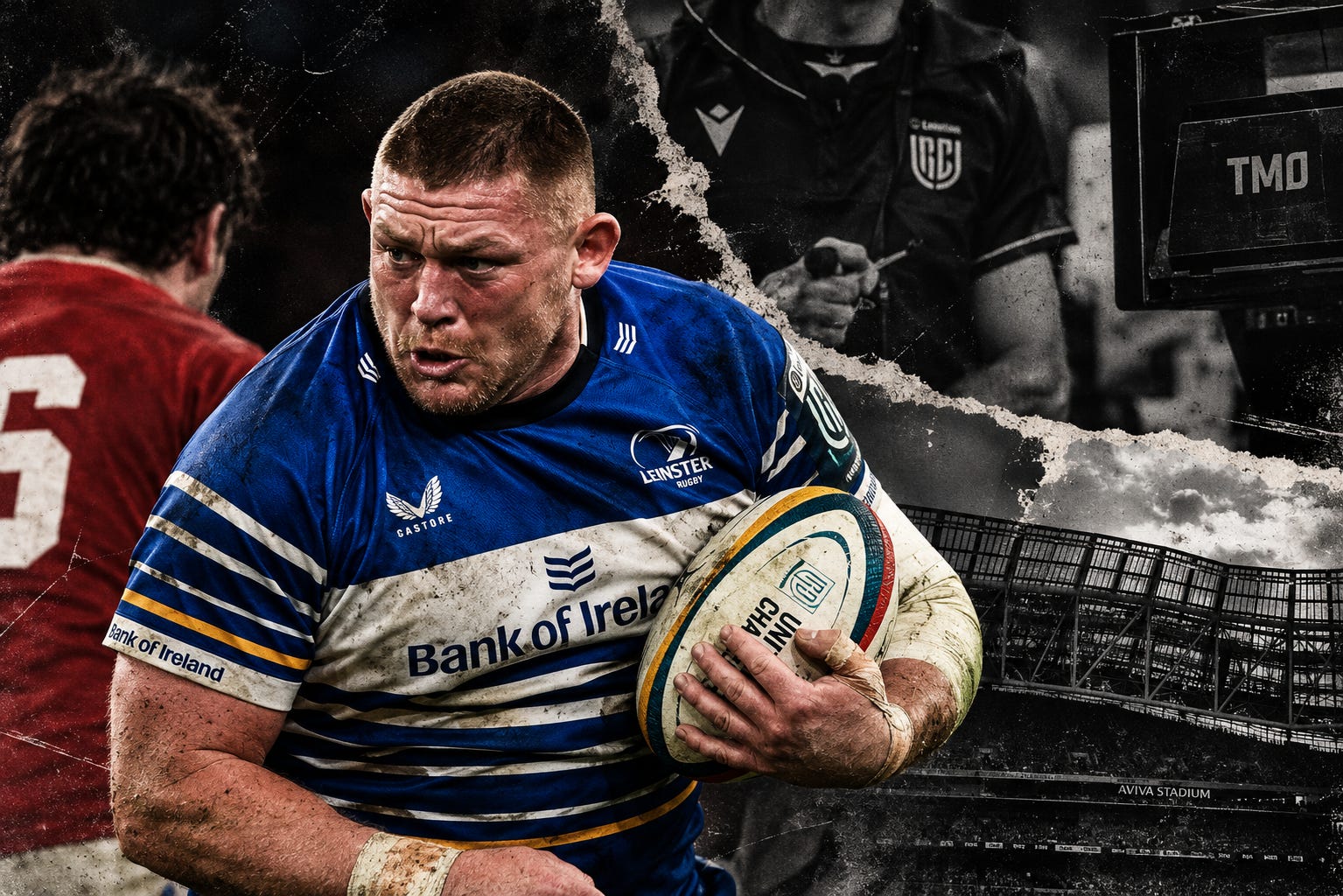
There’s a particularly uncomfortable moment in professional sport when an allegation becomes public, but nobody yet knows exactly what happened.
Journalists want answers. Supporters have opinions. Social media has found the footage, slowed it down and reached a verdict.
Meanwhile, the people responsible for establishing the facts are still doing their jobs.
Welcome to another week in professional rugby.
What happened?
During Saturday’s Leinster–Munster match at the Aviva Stadium, Gavin Coombes complained to referee Andrew Brace that he’d been grabbed in the groin area.
The referee consulted the TMO, but the footage available during the match didn’t substantiate the allegation.
Tadhg Furlong has since been formally cited over the incident, which occurred in the 37th minute. The citing falls under Law 9.27, which prohibits conduct contrary to the spirit of good sportsmanship, including grabbing, twisting or squeezing an opponent’s genitals.
The disciplinary process is now being arranged.
If found guilty, Furlong could face a significant suspension, potentially affecting his involvement in Ireland’s upcoming Nations Championship fixtures.
There is precedent. In October 2025, South African forward Jan-Hendrik Wessels received a substantial ban following a similar allegation during a URC match.
A citing, however, is not a finding of guilt.
And that’s where things get interesting.
Two players. Two reputations.
If a player believes something unacceptable has happened to him on a rugby pitch, he should be able to raise it without fear of ridicule or dismissal.
Equally, the player accused deserves a fair hearing before anybody decides what happened.
These two principles aren’t contradictory.
Yet we’ve become remarkably good at choosing sides before we’ve established the facts.
And in professional sport, the consequences of that can be enormous.
