


There is a version of working in elite sport that most people imagine.
High performance environments, driven individuals, a shared focus on excellence, where everyone is aligned around the same goal.
That part is true.
But it is not the full picture.
Because like many high-performance environments, professional sport is shaped by long-established cultures and ways of operating that have been in place for years. And for a long time, particularly in the men’s game, those environments were not built with women in mind.
When I first started working in professional rugby, I stepped into a world where I was not just new, I was immediately under scrutiny.
My husband, who also worked in the same environment, had been accepted at face value. That was never the case for me. And at the time, I was single, which seemed to invite a level of attention and assumption that had nothing to do with the job I was there to do.
From the very beginning, there was an assumption that I needed to prove why I was there.
And, at times, that I might not be there for the right reasons at all.
I was asked in my interview whether I had a boyfriend, followed by a warning about not getting involved with players. At the time, I smiled, nodded, and moved on. I wanted the job, and I understood quickly that challenging that kind of comment in that moment would not work in my favour.
But it set the tone.
There was an underlying narrative that I was not just a professional doing a job. That I was also something to be assessed, discussed, and at times, targeted.
That became very clear early on.
There was a moment where a page three poster* was put up in the dining hall with “new press girl” written across it. It was not subtle and it was not accidental.
It was a way of making it clear how I was being viewed.
Not for my work.
But for how I looked, and what role they had decided I played in that environment.
That kind of behaviour filters quickly.
It shapes what others think is acceptable.
And from there, it became something I had to navigate regularly.
There was objectification, often disguised as humour. Comments that were brushed off as banter, but carried an underlying message. I was aware that bets were being made about who would sleep with me. I was spoken to, and about, in ways that had nothing to do with the job I was there to do.
On away trips, that became more intense.
Long days, shared environments, less structure, and more opportunity for boundaries to be tested. There were moments where I found myself in situations that were uncomfortable and, at times, inappropriate. Being backed into a corner, having to manage how far something might go, and relying on my own judgement to navigate it.
I never believed anyone would seriously harm me.
But that does not make those situations acceptable.
And it certainly does not mean they should be normalised.
Even the practical elements of the role were affected by this.
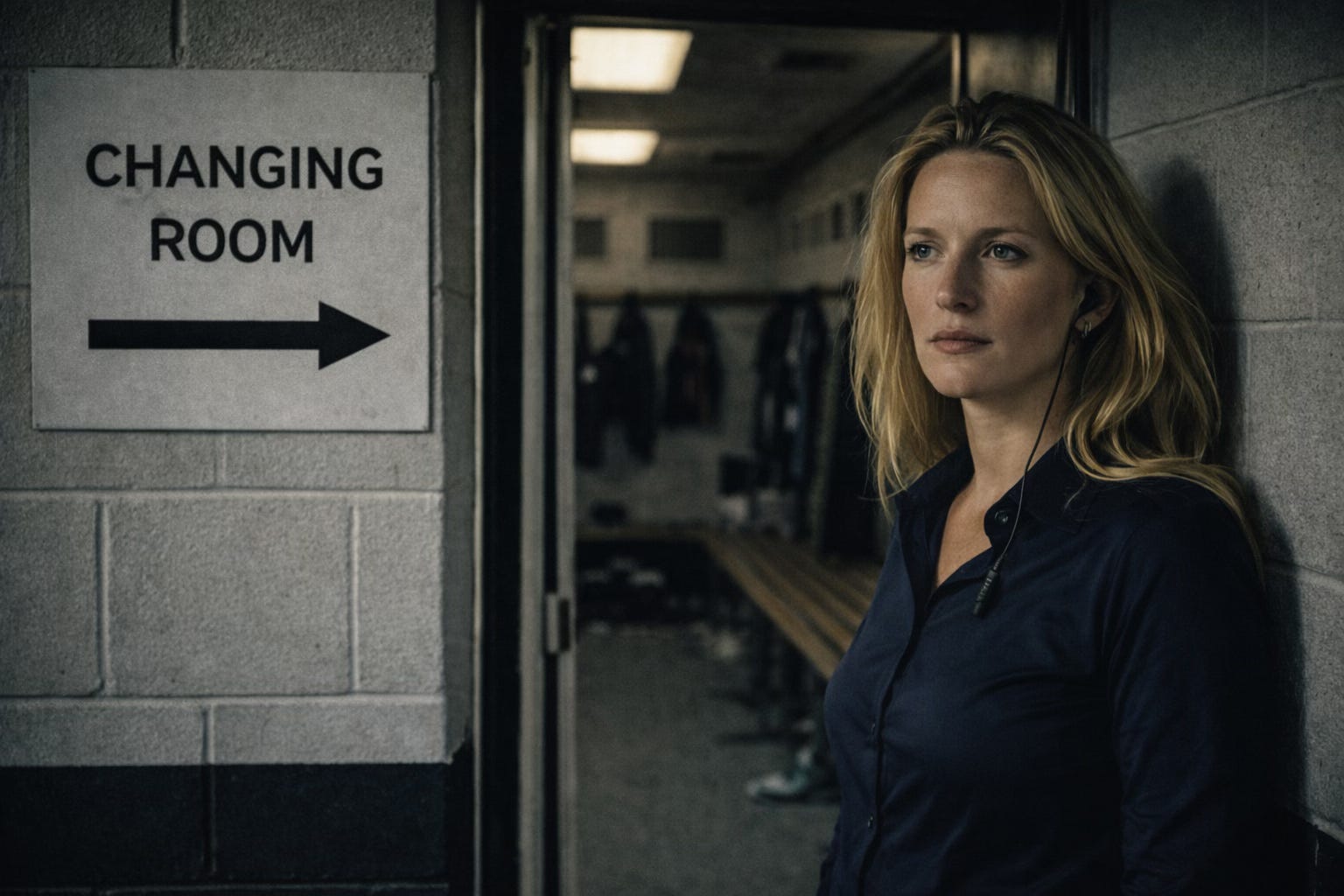
Something as straightforward as needing to get a player out of the changing room became complicated. Not because of the task itself, but because of how my presence was interpreted. On one occasion, I was physically pulled away from the changing room by the CEO and told I should not be near it, despite the fact I was simply doing my job.
That is the reality of how deep those assumptions ran.
At the time, I did not always respond in the way I would now.
Often, I said nothing. I laughed things off. I chose not to challenge behaviour because I did not want to be seen as difficult, or as someone who could not handle the environment. I wanted to keep the job, and I understood that speaking up came with risk.
Looking back, that was where I got it wrong.
Not because I should have fought every comment, but because by saying nothing, I allowed certain behaviours to continue.
And I know I was not the only one doing that.
Over time, though, something shifted.
I became clearer on what was acceptable and what was not. I became more willing to challenge behaviour directly, and to do so in a way that was calm, controlled, and difficult to dismiss. I stopped feeling the need to laugh things off, and started setting boundaries properly.
That changed how I was treated.
Not instantly, and not completely, but enough to make a difference.
Because in environments like that, people often take their cue from what you allow.
That does not excuse the behaviour. But it does explain why it continues. And it reinforces something important.
No one should have to operate in an environment like that. But many people still do.
Not just in sport, but in a range of industries where culture has not fully caught up.
What matters, then, is how you respond to it.
Not that it is acceptable.
Not that it should be tolerated.
But that you are clear on who you are, what you stand for, and how you expect to be treated.
Because the reality is, many people will face some version of this at some point.
Not always as obvious, and not always in the same form, but situations where you are underestimated, misjudged, or placed at a disadvantage before you have even started.
And in those moments, you have a choice.
You can shrink, stay quiet, and hope it changes.
Or you can be clear on your standards, your boundaries, and your value.
That is what I took from that experience.
Not that it was something to accept.
But that it required clarity.
How you operate.
What you allow.
Where you draw the line.
Not because the environment demands it.
But because you do.
* for the non-UK readers, a page 3 girl was usually a topless or scantily clad girl on the third page of a tabloid newspaper.