


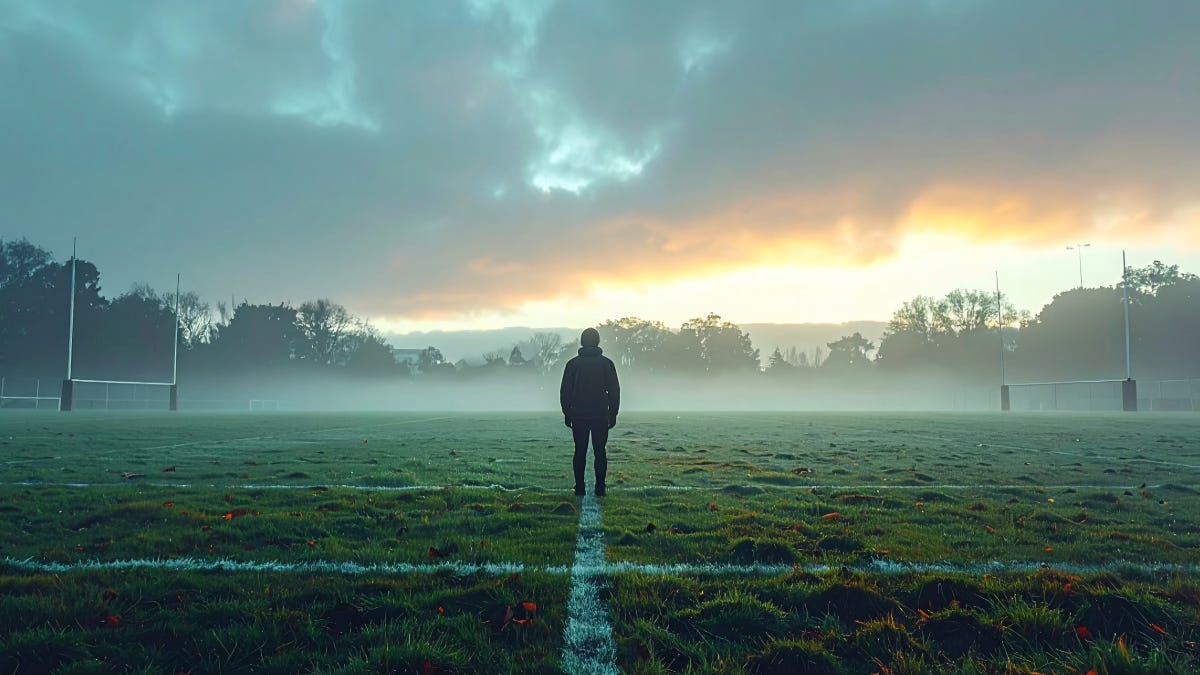
There is a moment, when you step into a high-performance environment, where something becomes very clear…
No one is coming to save you.
It is not said out loud. No one sits you down and explains it. There is no dramatic turning point where everything suddenly shifts.
It reveals itself more quietly than that.
You begin to notice that things move quickly, that expectations are high, and that everyone around you is focused on their own role, their own responsibility, their own performance. There is no space for someone to slow things down for you, or to carry you through the parts you find difficult.
You are expected to keep up.
When I first started working in professional sport, there were moments where that felt overwhelming. I did not know everything I needed to know, I did not always feel confident in what I was doing, and there were times where it would have been far easier to step back and wait until I felt more ready.
But the environment does not allow for that.
It does not adjust to your level of comfort. It does not pause while you figure things out. It keeps moving, and you either move with it, or you fall behind.
That is when the realisation starts to settle in.
You are responsible for this.
Not your background, not your experience, not whether you feel ready or not. Just you, and how you choose to operate within it.
That shift is uncomfortable.
Because it removes a lot of the stories people tell themselves. The idea that you just need a bit more time, a bit more support, a bit more confidence before you really step forward.
Those things are easy to lean on.
But in that environment, they are not particularly useful.
What matters is whether you can take ownership quickly enough.
Whether you can accept where you are, recognise what is required, and move towards it without waiting for someone else to make it easier for you.
That does not mean doing everything alone. It does not mean never asking questions or seeking support. But it does mean taking responsibility for your own development, your own standards, and your own progress.
That is a very different mindset from waiting.
And it is the difference I see most often now, outside of sport.
There are a lot of capable people who are still waiting.
Waiting for clarity, waiting for confidence, waiting for the right opportunity, or the right moment to begin. They assume that at some point, something will click into place and make it easier to step forward.
But it rarely works like that.
Clarity comes through action. Confidence is built through experience. Opportunities tend to follow people who are already moving, not those who are standing still.
The shift happens when you stop waiting for something external to change, and start taking ownership of how you operate.
When you decide that regardless of how you feel, or how prepared you think you are, you are going to step forward and work it out.
That is what elite sport forces on you.
It removes the illusion that someone else will make it happen.
And once you have experienced that, it becomes very difficult to go back to waiting.
Because you realise that progress was never about perfect conditions.
It was about responsibility.