


I can still picture it clearly.
Twickenham. The home of English rugby. Over twenty years ago now.
I was in my early twenties, stood high up in the stands with my dad, surrounded by eighty thousand people watching England play, the kind of place where the noise rolls around you and settles in your chest before you even realise it.
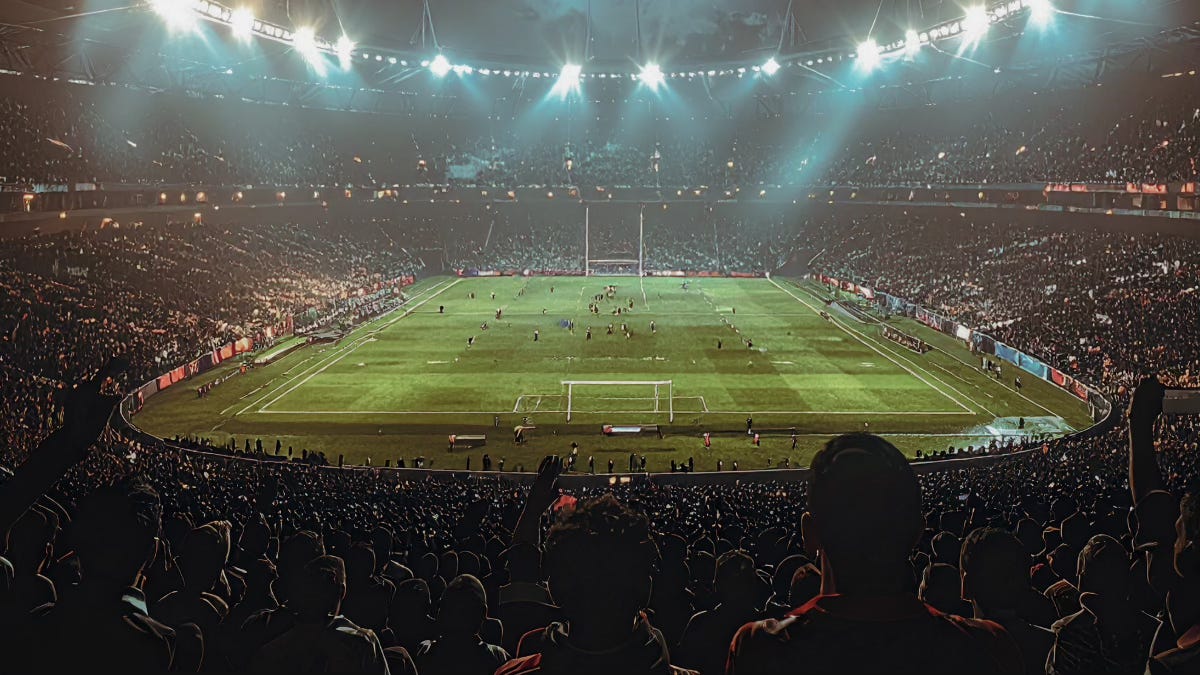
England had just scored and the place erupted. Everyone leapt to their feet, arms in the air, strangers grabbing each other, shouting, laughing and celebrating.
And that was the moment it hit me.
Not that I wanted to play sport.
But that I wanted to understand what made that happen.
At the time, I could not have explained it like that. I did not want to be a rugby player. I had no ambitions of running out onto the pitch. But there was something about the energy, the pressure and the importance of it all that completely gripped me.
It was not just noise or excitement. It was meaning.
That feeling that what was happening, right there in that moment, mattered.
Looking back now, I realise that what I was seeing was performance at its highest level. Not just on the pitch, but everywhere around it. The preparation, the decisions, the responsibility and the weight of it all.
And more than that, I was seeing something most people misunderstand.
Performance is not about talent.
It is about how you operate when something matters.
That was what I was drawn to, even if I did not yet have the words for it.
And yet, like most people, I did not immediately run towards it.
At that point in my life, I was working in a job that did not inspire me in the slightest. I had done well academically, I had followed the expected path, and still I found myself sitting at a desk thinking, surely this cannot be it.
I remember wasting time, procrastinating, convincing myself that I would figure it out eventually. Telling myself all the usual things people say when they are not quite ready to take a risk. You need more experience. You need more qualifications. You need to be more certain.
All of it was nonsense, of course.
Because the truth is, none of that is what got me into sport.
What got me there was that moment in the stands, followed by a decision that I was not going to settle for anything else.
I did not know how I was going to do it. I did not have a clear plan. I certainly did not have the perfect CV. What I did have was a willingness to start, however messy that looked.
So I began talking to anyone who would listen. I told people I wanted to work in sport before I even fully understood what that meant. I started writing, helping people, offering my time, building experience wherever I could find it. Most of it unpaid, much of it uncertain, all of it necessary.
At the time, it did not feel strategic or impressive. It felt uncomfortable. It felt like I was making it up as I went along, because in many ways, I was.
But that is how it works.
That is the part people do not often see.
There is a tendency to look at elite sport and assume it is all talent and big moments. That it is about what happens on the pitch, under the lights, in front of the crowd.
It is not.
It is built in the quieter moments. In the decisions made long before anyone is watching. In the willingness to keep going when there is no guarantee it will lead anywhere.
That is what I had witnessed at Twickenham, even if I could not fully articulate it at the time.
And it is what I carried with me into everything that followed.
Because the reality is, performance is not reserved for athletes. It is not something that only exists in stadiums or on match days. It is a way of operating. A way of thinking, deciding and showing up when something actually matters.
And over time, working inside professional sport, I came to understand it more clearly.
Performance is built in three places.
Clarity. Knowing exactly what matters and what does not.
Standards. The level you are willing to operate at, whether anyone is watching or not.
Execution. The ability to follow through, especially when it feels uncomfortable.
That is what separates people who are capable from people who actually move forward.
Most people are not lacking motivation. They are lacking structure.
They are waiting to feel ready instead of learning how to operate properly.
That is the gap.
That is what I have spent over twenty years inside professional sport understanding, and it is what I now see play out far beyond it.
Because whether you are stepping onto a pitch, building a business or simply trying to get unstuck, the principle is the same.
You do not rise to the moment.
You fall back on how you operate.
That day, stood in the stands at Twickenham, I did not find a career path.
I found the standard that everything else would be measured against.
And once you see performance like that, you cannot unsee it.
Young talent can be drawn to the idea of being a professional athlete. Reality is tested by how you perform against your peers and the question "am I really ready to go the distance, make all the sacrifices to get there?".