


First things first, I want to tell you about my free Confidence and Self Belief masterclass on October 12th.
For 30 minutes, I’m going to take you inside some of what high performance environments have taught me about confidence, capability and self belief. Why confidence is far less important than we make it, what to do when the voice in your head is louder than the evidence in front of you, and how to stop a feeling determining what you think you’re capable of.
You’ll also leave with The Self Belief Reset, a practical tool you can use whenever doubt starts getting in the way of performance.
It’s free, online and starts at 6pm UK time on Monday 12 October.
Now, onto the article…
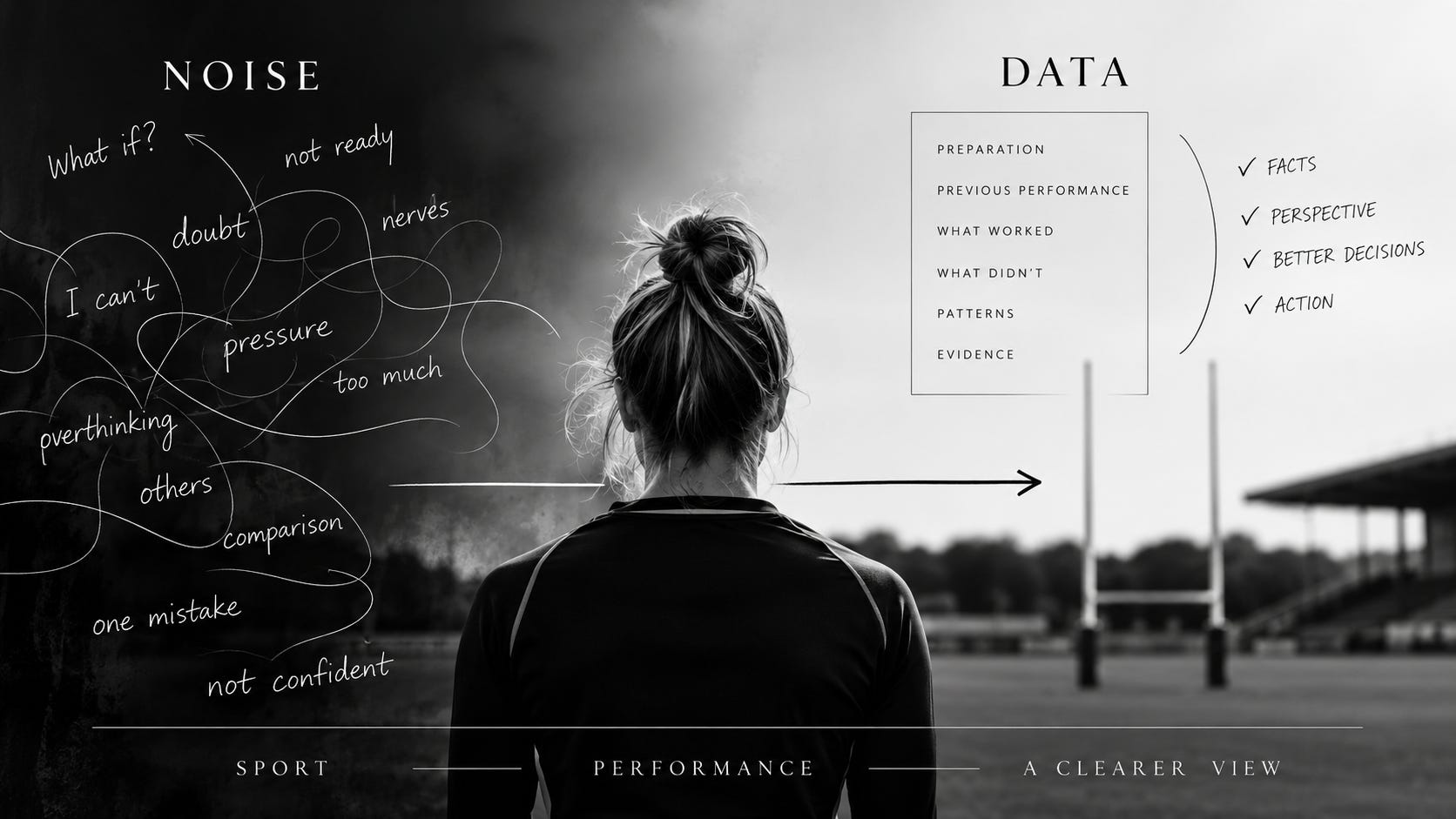
Confidence has become a prerequisite for an extraordinary number of things.
Apply for the job when you feel confident enough. Speak up when you’re confident in your opinion. Start the business when you’re confident it will work. Put yourself forward when you’re confident you’re ready.
There is a fairly obvious problem with this. Confidence is a feeling, and feelings are notoriously unreliable.
What sport knows about feelings
Spend enough time inside high performance environments and you see the problem with building performance around them.
A player can feel brilliant on Friday and terrible on Saturday. An athlete can prepare meticulously for months and still stand on the start line questioning whether they can do it. A team can produce all the evidence in the world that it is capable of winning and still experience doubt.
None of that changes the underlying capability. The training still happened. The previous performances still happened. The evidence hasn’t disappeared because the feeling changed.
And the match isn’t going to wait until everyone feels confident again.
Three things we muddle together
That distinction fascinates me, because we routinely mix up three very different things.
Confidence is a feeling. It’s how sure you feel, right now, about what’s in front of you. It moves with sleep, mood, the last conversation you had and whether the morning went to plan.
Capability is evidence. It’s what you have actually done, the skills you have built and the problems you have already solved. It doesn’t move nearly so quickly.
Self belief is trust. It’s the decision to back the evidence when the feeling isn’t cooperating.
When we muddle them, a lack of confidence starts masquerading as evidence of a lack of capability. I’m not sure I can do this becomes I can’t do this. Those are two completely different statements. The first is a feeling. The second is a conclusion, and it usually hasn’t been tested.
How high performance environments deal with it
High performance environments have to be better than that. They are built around preparation, repetition, standards, review and evidence. After a performance, the questions are broadly the same:
What happened? What worked? What didn’t? What does the data tell us? What do we change? What do we repeat? How do we perform again?
There is plenty of emotion in elite sport. Of course there is: pressure, nerves, disappointment, fear, excitement, doubt. Ultimately, though, performance requires action in the presence of all of it. The review doesn’t pretend nobody felt anything. It simply doesn’t let the feeling write the report.
There is an enormous amount we can learn from that.
Nobody is collecting your data
Outside those environments, we don’t tend to collect our performance data particularly well.
You probably don’t have an analyst recording every good decision you’ve made. Nobody is producing a highlights reel of all the occasions on which you dealt with something difficult. There isn’t a weekly review of the problems you solved, the judgement you showed, the risks you took that worked, or the things you did despite being unsure of yourself.
So something goes wrong on Tuesday and suddenly Tuesday gets to rewrite the entire story.
One rejection becomes perhaps I’m not good enough. One difficult meeting becomes I’m terrible at this. Someone else’s success becomes I’m behind. Nerves become I’m not ready. A lack of confidence becomes I’m not capable.
That’s bad analysis. Nobody in an analysis room would judge a season on one match, or a player on one mistake. Yet that’s exactly what we do to ourselves.
And it can have enormous consequences, as some of the things that hold us back most powerfully aren’t external. They’re the conclusions we draw about ourselves. We don’t apply, we don’t ask, we don’t say the thing, we don’t take the opportunity. We wait to become a version of ourselves who feels sufficiently confident to act.
Another way to look at it
High performance gives us a different approach, and it comes down to three steps.
Separate the feeling from the evidence. Notice the feeling and name it, then put it to one side. Alongside it, write down what you actually know: what you’ve done before, what you’ve prepared, what has gone well in similar situations.
Interrogate the data. Ask yourself whether your conclusion rests on one moment or on a genuine pattern, and what you would say to a teammate with exactly the same record.
Decide what the performance requires. The question isn’t whether you feel ready. It’s what this moment needs from you, and whether the evidence says you can give it.
The Confidence Myth Masterclass
I’ve spent more than 20 years inside professional and elite sport, and this is one of the areas I’ve become increasingly interested in taking beyond it. So I’ve made a masterclass about it.
The Confidence Myth: How to Supercharge Your Self-Belief Using Tools from Elite Sport
It’s free, it’s 30 minutes, and I’m running it on Monday 12 October at 6pm UK time.
We’ll look at the difference between confidence, capability and self belief; how high performance environments deal with the gap between how we feel and what we’re capable of; and a practical way to interrogate the story in your head before you allow it to determine what you do next.
You’ll also get The Self Belief Reset, the worksheet I’ve created to help you put it into practice.
[Register for the free masterclass]
You don’t need to feel confident to be capable. Sometimes you just need to stop treating the feeling as evidence.