


"Individual commitment to a group effort — that is what makes a team work, a company work, a society work, a civilisation work." — Vince Lombardi
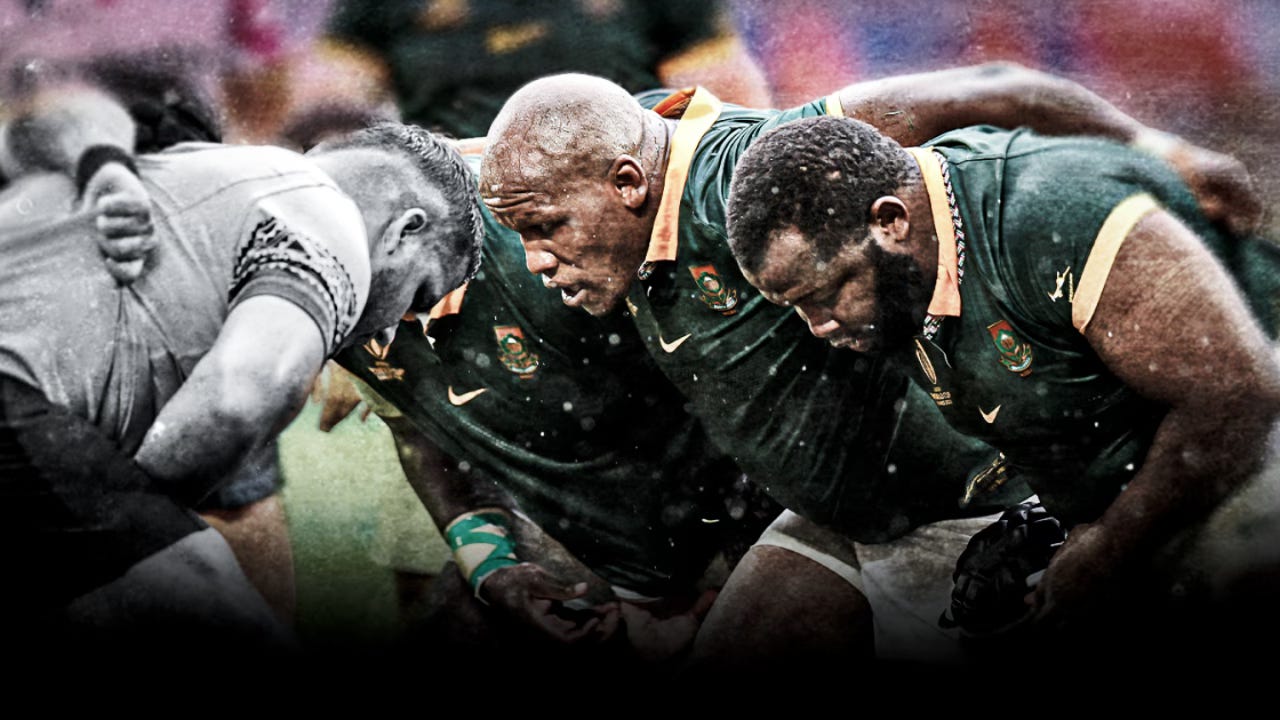
Life can sometimes feel like a rugby match.
No matter how many times you get tackled and taken to the ground, you just have to keep getting back up and carrying on. It’s exhausting and it can leave you battered and bruised, but you still get up. You keep going.
Hits come in all forms. A relationship. A health scare. A job that grinds you down. A public humiliation you didn’t see coming. The important thing — the only thing, really — is that you don’t stay sprawled out on the floor.
Professional sport teaches you this faster than almost anything else. Because in elite environments, the hits are constant, they are public and there is no option to quietly withdraw and recover in private. You get up. You keep going. Or you don’t last.
I know this because I lived inside it for twenty years.
And some of those hits were ones I genuinely did not see coming.
There was a Head Coach I worked with early in my career who had a particular talent for public humiliation. On one memorable morning, he called my name across a dining hall in front of the entire squad and proceeded to tear into me in front of everyone. Had I quit? Couldn’t I do my job anymore? Was it all just too much hard work for me?
I stood there, in front of the entire squad, and kept my face completely neutral.
What I felt, walking back to my office afterwards, was something considerably different. Humiliated. Angry. Slightly shaky, if I’m honest. The kind of feeling where you close the door and just stand there for a moment wondering what on earth just happened.
But here is what I also knew in that moment. I had people. Colleagues who had watched what happened and would check in on me later that day. Friends outside of sport who would remind me who I actually was when someone in rugby was trying to make me forget. A family who had absolutely no interest in rugby politics and who would listen that evening without any of it meaning anything more than it needed to.
I had my Bomb Squad.
During the 2019 Rugby World Cup, South Africa’s Director of Rugby/Head Coach Rassie Erasmus reconfigured his bench in a way that divided the rugby world and ultimately won them the trophy.
Instead of the traditional five forwards and three backs, he selected six forwards and two backs. The idea was straightforward but revolutionary at the time. Rather than starting strong and fading, South Africa would maintain their physical dominance for the full 80 minutes. Fresh, powerful forwards arriving when everyone else was exhausted. A pack that got stronger as the game got harder.
It worked. They won the World Cup.
But the tactics were only part of the story. He asked them to stop thinking of themselves as starters and replacements. To stop seeing themselves as first choice and backup. Instead, he asked them to think of themselves as two integral units of the same team. Equal in value. Equal in purpose. Both essential to the outcome.
That reframing changed everything.
Because the Bomb Squad wasn’t just a tactical selection. It was a collective commitment to the same goal, regardless of when you were called upon or what role you played.
The thing about the Bomb Squad that makes it so powerful as a concept is not the physicality of it. It is the timing.
They don’t send their reinforcements on at the beginning, when everything is fresh and the outcome still feels possible. They send them on at the moment when the game is hardest. When legs are heavy, lungs are burning and the opposition can smell an opportunity.
That is when the Bomb Squad arrives.
And that is exactly how it works in life too.
Your Bomb Squad are not necessarily the people who are with you at the start, when everything feels exciting and the energy is high. They are the people who show up at the difficult part. When the hits have been coming for a while. When you are tired and bruised and starting to wonder whether it is worth carrying on.
They are the people who come on when you need fresh legs and hold the line until you find yours again.
So who is in your Bomb Squad?
Think beyond your network and the people who wish you well from a distance. The specific people you would call at the difficult moment. The ones who would show up without being asked. The ones who tell you the truth when you need to hear it and back you completely when you need that instead.
In professional sport, every player knows exactly who is on the bench and what they bring. There is no ambiguity. No assumption. The roles are clear, the commitment is mutual and everyone understands that the team is stronger for having them there.
Most people drift through life without ever being that deliberate about it.
They assume their people know they are valued. They forget to look after the relationships that matter most when things are going well, then find themselves reaching for support in a crisis and discovering the connection has quietly faded.
But here is the thing. Your Bomb Squad can only do so much.
You have to start the game well. You have to back yourself first — keep your focus on the direction you are heading, not on the person trying to knock you off course. Criticism will come. Difficulties will come. The question is whether you let them stop you or whether you adapt, find a different route and keep going anyway.
I stepped away from sport when Covid hit and threw myself into helping my husband with his family’s furniture business — a 140 year old store that suddenly had no footfall and needed someone to overhaul everything from the ground up. I felt completely out of my comfort zone. I knew nothing about interiors. But I knew PR, I understood people, and I backed myself to see things through a different lens.
It felt like a step sideways at the time. Looking back, it was exactly the kind of pivot that keeps you going when the direct route is blocked. I found my way back to sport. I do both now. It hasn’t always been easy, but I kept going.
That is what resilience actually looks like from the inside. No drama. No heroics. Just the refusal to stay sprawled out on the floor.
Your Bomb Squad needs maintaining. It needs honesty. It needs the kind of mutual commitment Erasmus was asking his players for — not just when it suits you, but as a consistent way of operating together.
Because when the hits come, and they will, you are not going to win on your own.
But you have to be willing to keep playing first.
Back yourself. Identify your people. Look after them.
And make sure they know, without question, that you would do exactly the same for them.
The Performance System is a four week programme that takes the structure elite sport runs on - the structure, clarity, standards, focus and self belief - and puts it directly into how you operate in your own life.f you are ready to perform at a higher level, with greater focus, stronger habits and a clearer sense of where you are going, the waitlist is open now. You can join here from anywhere in the world.
You’re describing a feeling in sport that is so hard to name. It’s this inherent belief and trust in the team around you. It’s an ability to read each other without saying anything.
That feeling comes naturally in the vulnerability of sport because sport is raw and visible like you mentioned.
I realized at some point that to find this outside of sport, I had to open myself to vulnerability with others. I had to recreate the environment where ghat connection is born without the sweat, blood, and screaming.
It looks different at work and at home, but it is possible.