


There was a player, not from my own club, who I watched become the most talked about young talent in the entire sport within the space of about a season. He was young, good looking, and played a genuinely exciting brand of rugby, the sort that gets pundits leaning forward in their seats. He was also, at that stage of his career, inconsistent in the way most very young players are. He made mistakes on the pitch that a more experienced head would not have made. None of that seemed to matter to anyone writing about him. The press had already decided he was the next great one, the heir to the players everyone in the sport measured greatness against, and once that decision had been made publicly and repeatedly, the actual evidence in front of them stopped changing anyone’s mind.
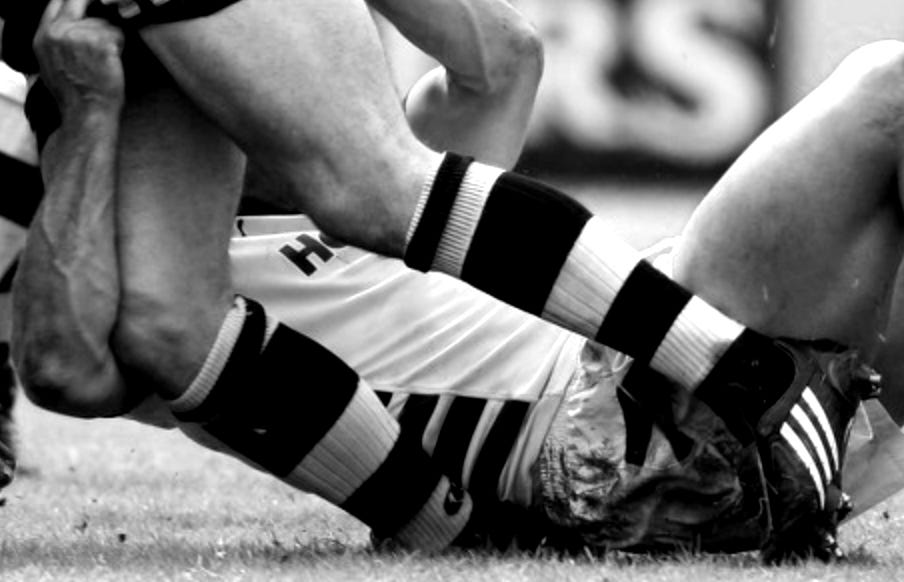
I was there for the afternoon that turned all of that into something else entirely. It was a Premiership play-off, at the opposition’s ground, a huge knockout occasion with a European place riding on it. Partway through the match he was caught underneath a tackle awkwardly, his leg trapped beneath him, and it was immediately obvious from his reaction and the reaction on the pitch that this was not an ordinary injury. I remember the specific, sickening quality of it, the way a couple of players nearby had to turn away, one of them genuinely looking as though he might be sick. It was a fracture dislocation, the kind that ends a season on the spot and leaves a room full of hardened professionals visibly shaken. We lost that day. It was not a match we should be proud of, results wise, and I fully expected the press pack afterwards to want to talk to our players about a defeat in a match that mattered. No journalist did. Every single one of them wanted to talk about the other side’s injured golden boy, on a day we had actually been the story in every sense that should have counted.
By the time I stood in that press conference room, he had already had one brush with the press that had nothing to do with rugby at all. He had been dropped from an England squad before he had even won his first cap, sent home over a nightclub visit in the build up to a match, and the story ran for days with a seriousness that the same story about a more established player would probably never have earned. What followed, later that same year, only deepened the pattern. That autumn, he was in a very public, very high profile relationship with a well known television presenter, the kind of tabloid pairing that simply did not happen to rugby players at that point, and photographers who had never previously had any reason to be near a training ground started turning up to his regularly. Within weeks of that relationship becoming public, there was a training ground bust up with a senior teammate too, over missed tackles in a contact session, that left him with a bloody nose and made the papers within days. None of it, taken on its own, was necessarily remarkable, although was certainly negatively, but taken together, inside a single calendar year either side of that injury, it meant he had stopped being a promising young player having an inconsistent season and become something else entirely, a story that ran with or without him.
It did not stop after that season either. Across the decade that followed there was a nightclub incident in Australia that cost him a fine, a curfew breach that saw him stood down by his own club, a genuinely serious accident on a night out that put him in hospital, a drink driving arrest, and a fine years later after he admitted an assault on tour. Each one was different. Each one made headlines that had nothing to do with what he could actually do with a rugby ball, and after a while it became genuinely difficult, even for people who followed the sport closely, to remember which specific headline belonged to which specific year.
None of that, though, is actually the part that changed how I did my job for the rest of my career. That part happened somewhere else entirely, somewhere press officers only ever really talk about among ourselves, and it is below for paying members of The Dressing Room.
