


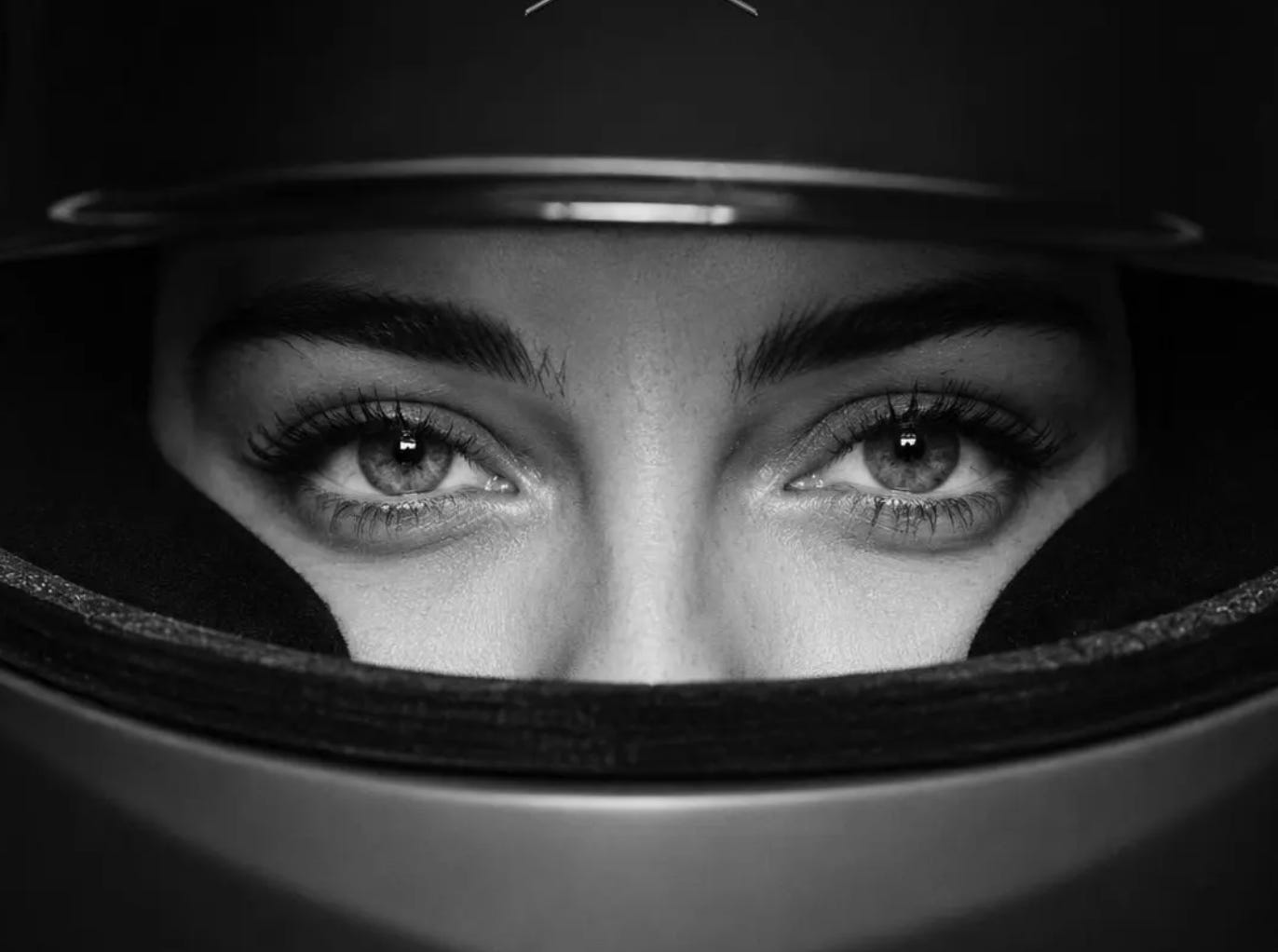
I happened upon a Forbes feature about Formula 1 this week that got me genuinely excited. It wasn’t about the latest race news or sponsorship deals, but about a new community for female Formula 1 fans called The Formation, and it is one of the most genuinely inspiring things I have read about sport all year and mainly because it spoke to me, personally.
Not only did its founder, Amy Mansell, launch it while she was nine months pregnant with her second child but within just three weeks it had passed ten thousand followers on Instagram without a penny spent on paid promotion. Female F1 fans have signed up from 79 different countries and when you compare that with Formula 1’s own figures that put its global female fanbase at roughly 350 million people that just demonstrates the appetite for such a move. And yet, the research behind those numbers also found that a large proportion of women still felt the sport did not fully understand them.
The line that caught my attention the most though was Mansell’s description of what success would actually look like for her community. Membership numbers were the least of it. The measure she cared about was the woman who actually goes to her first race because she no longer feels she is going alone. It’s about the young engineer who finds a mentor or the student who applies for her first job in the sport because someone opened a door for her that she could not see from outside.
Reading that article sent me straight back to think about my own numbers, from a different sport, a long time before anything like The Formation existed for anyone.
At my club, there were two of us who travelled with the men’s team. Me, working in comms and media, and the sports massage therapist, taping ankles and strapping shoulders in a room that had never been designed with either of us in mind. Within a travelling squad we had twenty three or so players, four coaches, a doctor, three or four strength and conditioning staff, a team manager and the kit man. When you added in the two of us, the travelling party came to around thirty five people. Just two of us were women. That is just under six per cent.
When I first started in professional rugby, only three of the twelve Premiership clubs had a woman doing what I did. Three, out of twelve. Widen that out to the European competitions those same clubs played in, and I can only remember one more woman doing anything similar.
I want to be honest about what that actually felt like. I assumed that, because the sports therapist was the only other woman travelling, we would find some kind of kinship, some shared alliance. I was wrong, or at least it did not happen the way I expected. Mostly I felt her keep her distance from me, and I never fully knew why. I am careful not to guess at her reasons. For a long time I told myself it was because she had earned her place in that environment long before I turned up, and whatever she needed to do to hold it was entirely hers to decide. In hindsight, I wonder whether I made enough effort either, too busy trying to carve out and earn my own spot at the table to notice that she might have been feeling exactly what I was. Whatever the truth of it, the effect on me was real. There was no shared shorthand, no look across the room, none of the solidarity I had quietly expected simply because we were both women in the same building. What I actually felt, most of the time, was isolated.
Away from the club, among the other press officers and media managers across the league, it was completely different. I felt entirely at home there, like I belonged without having to earn it first. We were all doing the same job, all seeing the game from the same angle, all in the same boat professionally regardless of which crest was on our lanyard, and that shared position did more for me than shared gender ever did back at my own club.
It taught me something I did not have words for at the time. It is not being a woman in a room full of men that builds solidarity. It is standing in the same specific position as somebody else, doing the same job, carrying the same weight. My counterparts at other clubs and I shared a job, and that turned out to matter far more.
Some of it was small and practical too, and small practical things add up faster than people expect. Kit that was never made in your size. Facilities and schedules, even food, built entirely around the men in the party, with the assumption that anyone else would simply manage. Inside The Formation’s own community, members are already raising the same kind of thing about Formula 1 itself, comparing notes on inadequate bathroom facilities at circuits and the price of basic health products at events that cost hundreds of pounds to attend. Different sport, same oversight. Nobody sets out to build a system that excludes people. It just happens, quietly, every time the default assumption in the room is that everyone in it looks the same.
What strikes me most about what Mansell has built is that it is not just grouping women together and hoping something forms, the way proximity did or did not for me and my club colleague. It is doing deliberately what happened for me naturally with the other press officers. It is putting people who share a specific position, the same passion, the same stage of career, the same specific experience of loving this sport, into direct contact with each other on purpose. The WhatsApp groups, the city networks, the mentoring conversations, engineered around genuine shared position rather than the broad and often unreliable assumption that any two women in the same building will naturally have each other’s backs.
And it is not just Formula 1. My own sport is slowly starting to build the same kind of thing on purpose. World Rugby now runs a proper careers programme with peer to peer mentoring for around two hundred and fifty women across ninety one countries every year, matching people at the same stage of their career rather than leaving them to find each other by accident the way I had to. The United Rugby Championship’s Women’s Leadership Academy is now in its fourth year, connecting young women directly with mentors and decision makers across the sport. Neither of those existed when I was still travelling with a squad of thirty odd men and one other woman who I hoped, quietly and perhaps unfairly, would simply become my ally by default. They exist now. That is not a small thing. That is real change happening in real time, in the sport I gave twenty years of my working life to.
There is a harder edged point sitting inside all of this too, which is that none of it is charity. Separate research across ten countries found that the vast majority of women who follow sport play a leading role in the purchasing decisions in their household, whether that is merchandise, travel, or which sponsor gets their money. A meaningful share of them said they were more likely to buy from a brand specifically because it backed their sport. Communities like The Formation are not simply making space for women who were already there. They are organising real spending power that sponsors and rights holders have spent years failing to understand, let alone earn.
That is the actual lesson sitting underneath all of this, and it reaches well beyond sport. Do not assume solidarity will simply appear because someone shares one visible thing about your circumstance. It might. It might not, and that is nobody’s failing. What actually builds it, reliably, is shared position. The same job, the same stage, the same specific weight being carried. If that shared position exists, look for it and use it deliberately, the way I did without realising it with the other press officers. If it does not exist yet, build it on purpose, the way Mansell has, rather than waiting for a connection that may never come simply because two people happen to look similar on paper.
I did not have any of this twenty years ago, and I am genuinely glad the women coming into this sport now will not have to build that same instinct entirely alone, the way I did. It is exactly why I take such care now with the people I work with, making sure nobody is left assuming support will simply appear on its own when it can, instead, be built.
I still do the maths sometimes, no matter what room I am in. It’s an old habit. But these days I do it with real hope, because rooms like that are finally being built on purpose, in my own sport and beyond it, rather than left to chance. We need many more of them. Enough that, one day, nobody has to do the maths at all.
The strongest point here is that belonging is rarely created by representation alone; it is built through shared experiences, shared challenges, and intentional structures that connect people. A room can become more diverse without becoming more inclusive, and the difference often comes from whether people are given the opportunity to find others who truly understand their position.