


Inside The Dressing Room this week:
Why a breakdown in negotiations between Rugby Australia and its players has brought the value of professional athletes into sharp focus.
What the dispute over pay, image rights and insurance tells us about the competing interests within professional sport.
A moment from my time at Bath Rugby when everybody seemed concerned about managing a player’s story, but I was more concerned about the player himself.
Why representing an athlete, employing an athlete and genuinely looking after an athlete are three very different responsibilities.
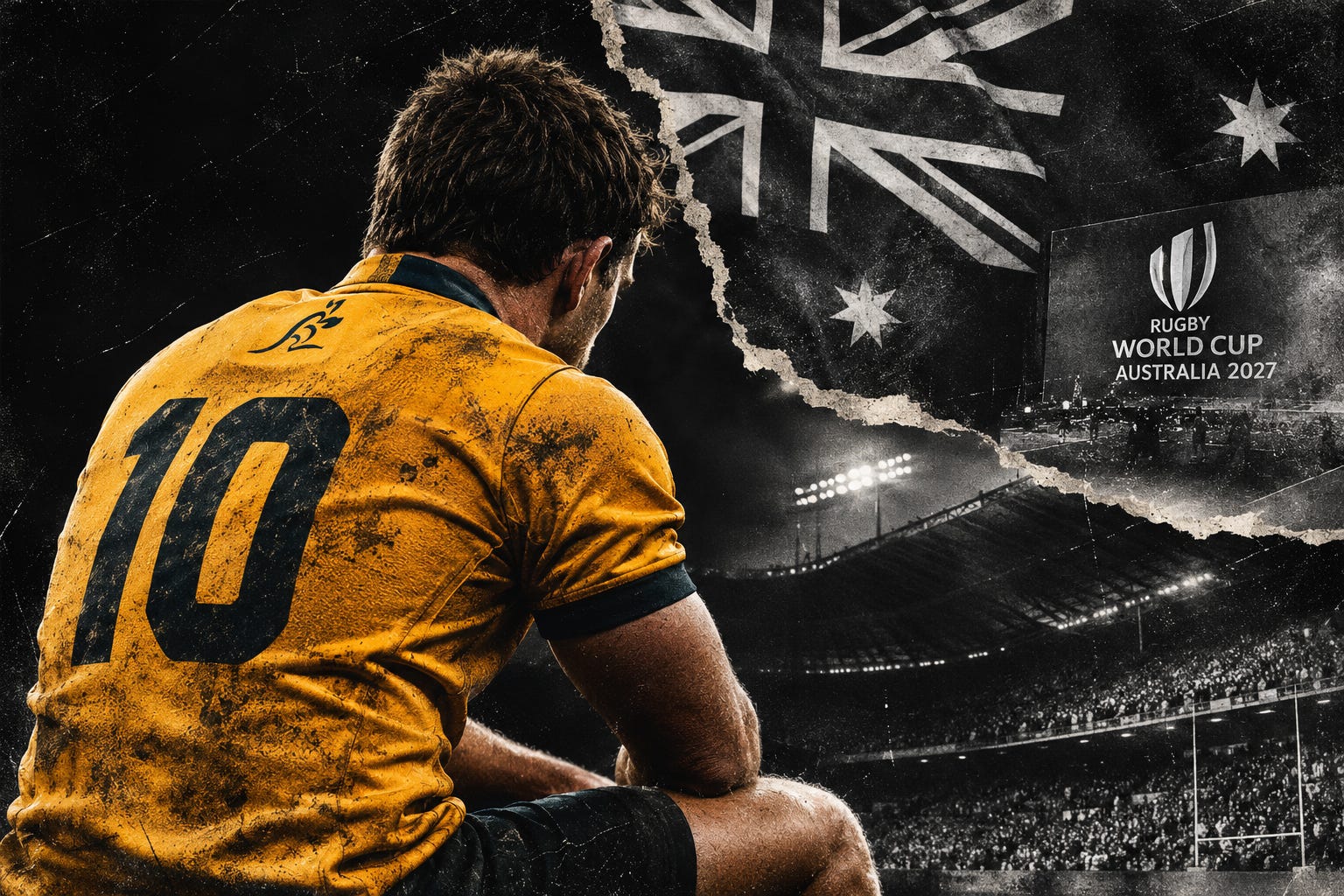
There’s something rather revealing about a professional rugby player’s image appearing on a billboard.
To the supporter, it’s the face of somebody they admire. To the sponsor, it’s an association worth paying for. To the club or governing body, it’s a commercial asset that helps generate revenue, sell tickets and attract investment.
And to the player?
Well, it’s their face.
I’ve spent more than twenty years working inside professional rugby, and one of the things I’ve become increasingly interested in is the number of people who have a professional interest in an athlete.
Clubs, coaches, agents, sponsors, governing bodies, broadcasters, commercial departments and, of course, supporters.
All of them have a stake in what that athlete does, how they perform and what they represent.
But those interests aren’t always the same as the interests of the individual.
And this week, Australian rugby has provided a rather interesting example.
What happened?
Rugby Australia and the Rugby Union Players’ Association have failed to agree a new collective bargaining agreement after the previous deal expired on Saturday, 31 October.
The negotiations have been going on for months, with disagreements over player payments, the distribution of revenue and the conditions under which professional rugby players work.
There is a considerable amount at stake.
Australia is preparing to host the 2027 Rugby World Cup, an event expected to generate substantial revenue for the game.
The players’ association has challenged Rugby Australia’s proposal not to share the reported A$100 million hosting fee directly with players. Rugby Australia argues that the money is needed to support the long-term future of the game, including community rugby, development pathways and high-performance programmes.
There are disagreements over insurance arrangements, too, including career-ending injury cover and private health insurance premiums.
But perhaps the most interesting development came on Sunday, when the players’ association announced its intention to commence legal proceedings concerning the commercial use of players’ rights now that the previous agreement has expired.
In other words, the argument is no longer simply about how much players should be paid.
It is also about the terms under which Rugby Australia can commercially use players’ names, images and associated rights now that the collective agreement has expired.
The Wallabies, meanwhile, are in the UK preparing for their autumn fixtures.
Professional rugby carries on.
The rest of this article is exclusively for paid subscribers to The Dressing Room. Read on for a behind-the-scenes account of a high-profile controversy at Bath Rugby, when a player’s agent arranged a television interview without the club’s knowledge. I’ll share what happened when I finally managed to reach the player, why I disagreed with the club’s response, and what the experience taught me about who really looks after professional athletes.
